European shipping in numbers
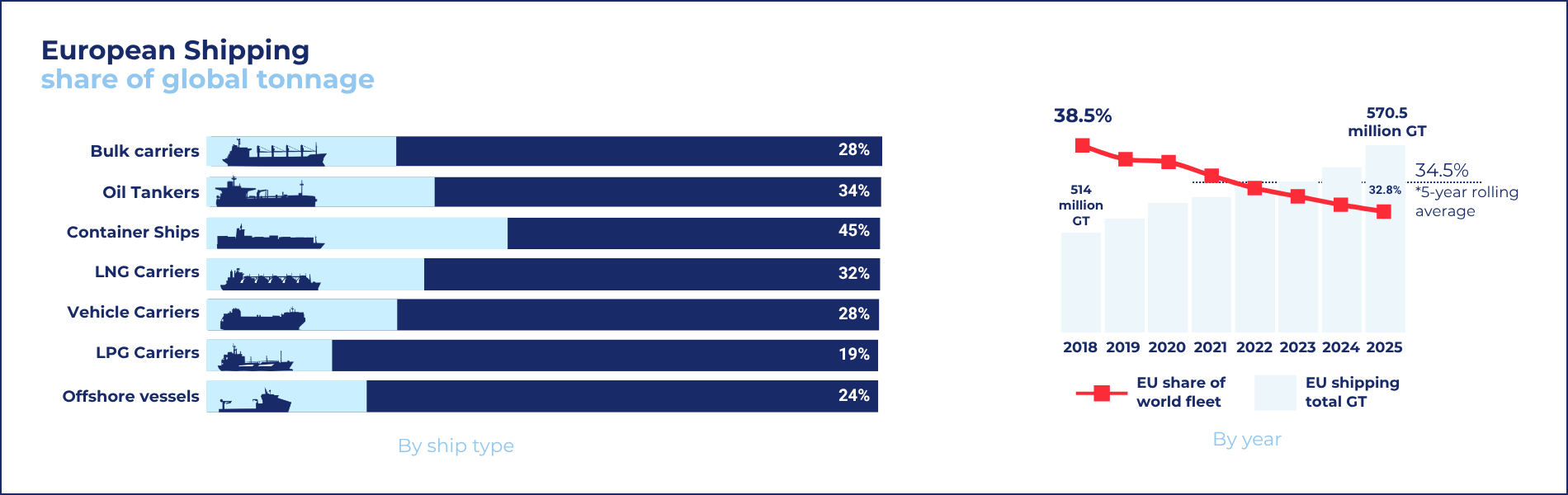
European shipping is a global maritime powerhouse. With 570.5 million gross tonnes (GT) across 22,403 vessels, European shipowners represent one third of the world’s shipping capacity and hold strong positions in every major vessel segment, from bulk carriers and tankers to container ships and offshore vessels.
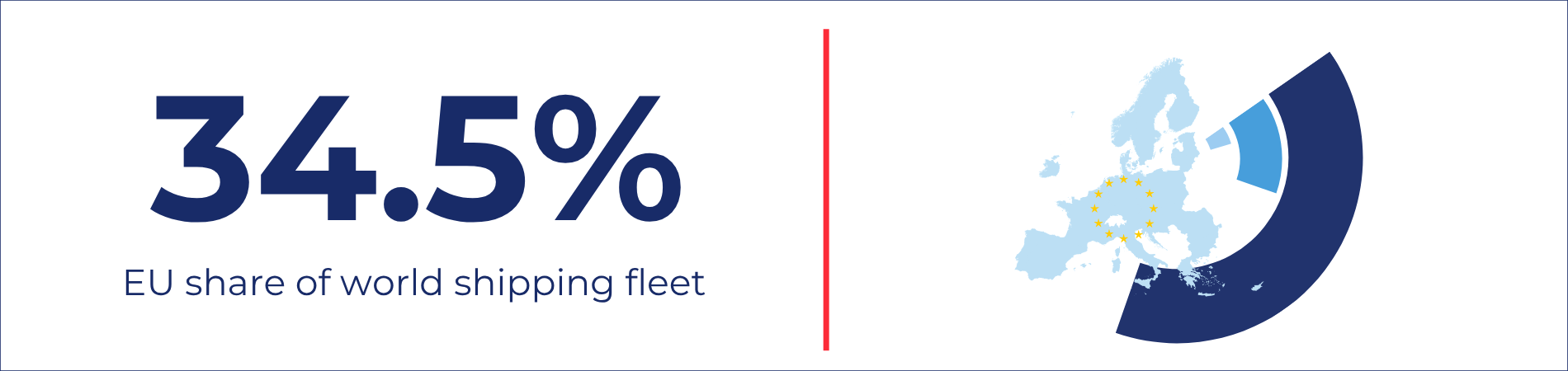
European shipowners represent 34.5% of the global shipping fleet in gross tonnage (GT), measured as a five-year rolling average. By comparison, the European Union and Norway together account for around 5% of the world population and 15% of global GDP.
Every year, European Shipowners | ECSA publishes the study The economic value of European shipping with numbers on the European shipping fleet, its different segments, and the economic value of shipping for Europe. This year, we included numbers on the clean fuels price gap and strategic security.
Download the flyer with the key figures from the 2026 edition or scroll through it here. The full study (and older versions) can be found on the bottom of this page.
European shipping at a glance
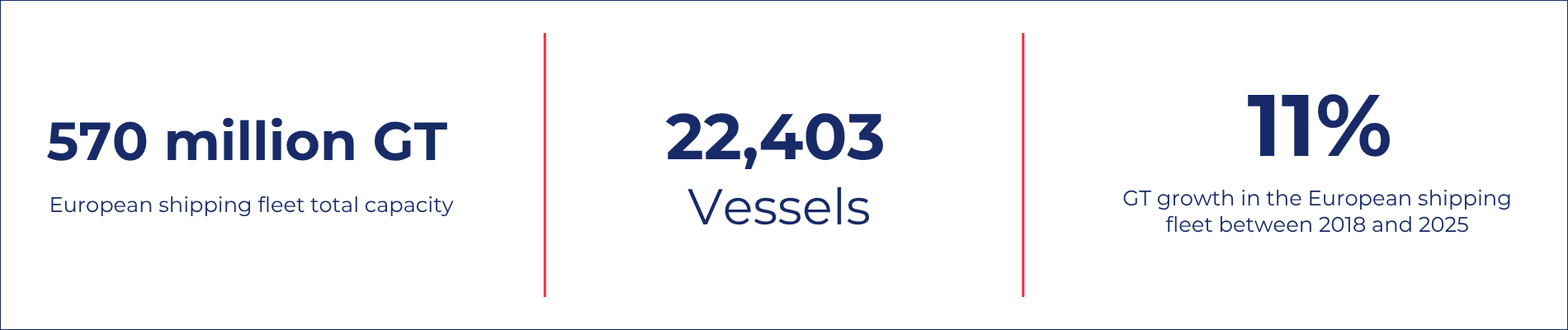
The European fleet is growing steadily but other fleets are growing faster. The European-controlled fleet reached 570.5 million GT across 22,403 vessels in 2025, an increase of around 11% since 2018. Annual growth reached 2.6% in 2025, the strongest increase over the 8-year period, pointing to renewed momentum, supported by a strong European orderbook.
However, over the same 2018-2025 period, the global fleet expanded by approximately 30%, driven largely by rapid growth in the Asia-Pacific region. Consequently, the European share of global GT declined from 38.5% in 2018 to 32.8% in 2025, resulting in a 34.5% five-year rolling average. This represents a decline of 0.5% from 2024.
The harsh competition European shipping faces globally makes international regulations and a level playing field more necessary than ever.
The economic value of European shipping
In recent years, European shipping has seen strong, sustained growth across key economic indicators reflecting a resilient sector that is vital to Europe’s economy.
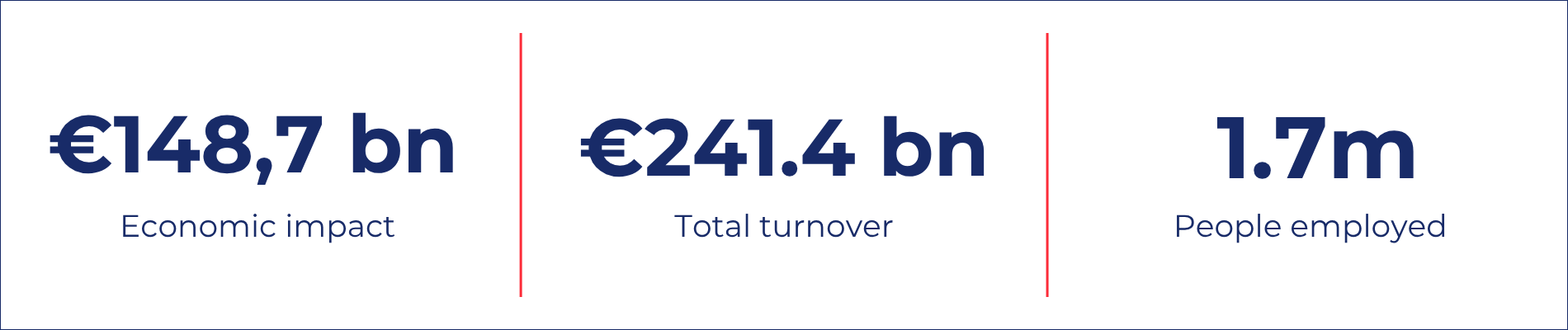
The economic impact of European shipping is estimated at €148.7 billion in 2023, up from €127.8 billion in 2021, supporting approximately 1.68 million jobs, compared with 1.45 million in 2021. Turnover reached €241.4 billion in 2023, rising from €186.7 billion in 2021.
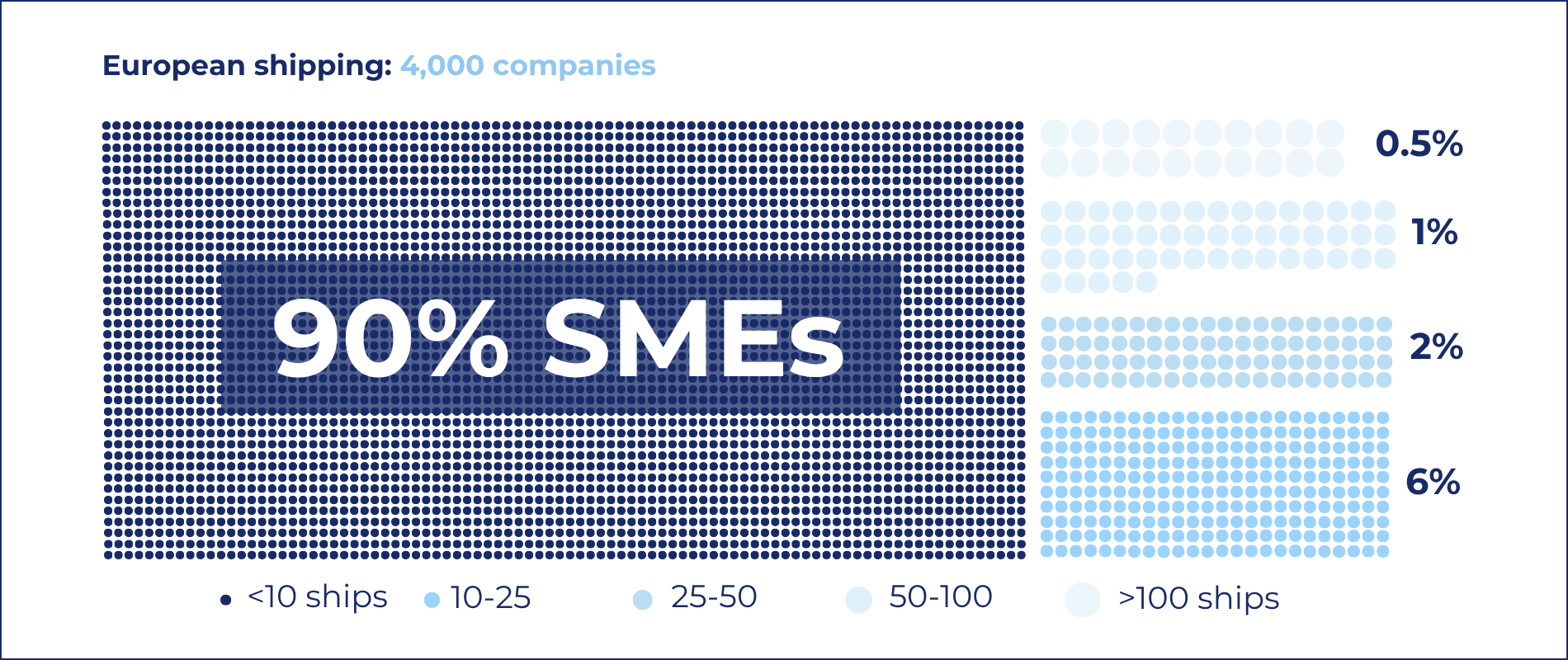
Over 90% of European shipping companies own fewer than 10 vessels. Only 0.5% own fleets of more than 100 vessels. 6% have fewer than 25 vessels, 2% fewer than 50 and 1% have a fleet of between 50 and 100 vessels.
This diversity underpins the sector’s resilience and flexibility.
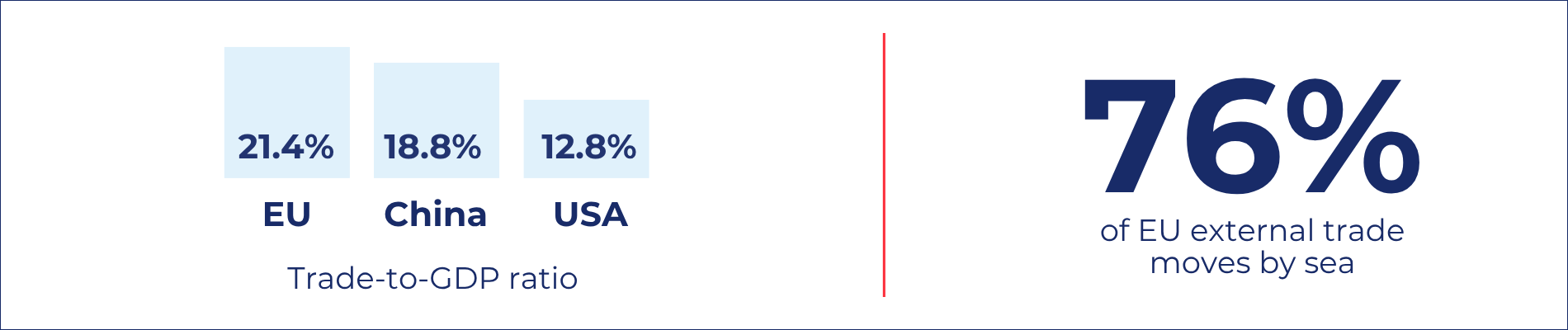
The EU’s economy is deeply interconnected with the world – and more so than other major trade blocks. 76% of EU external trade moves by sea, making shipping vital for sustaining this openness and competitiveness. From raw materials to finished goods, European shipping ensures that food, energy, and essential supplies reach the continent.
Shipping and European security
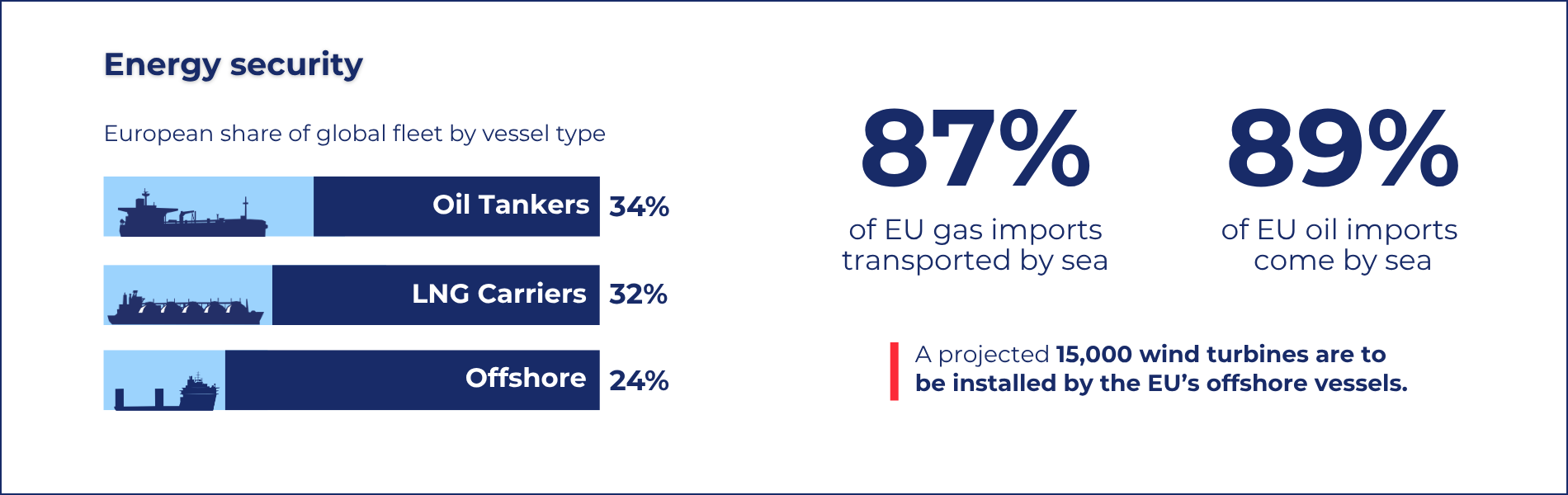
Energy security: A strong European fleet ensures secure and diversified energy supply maintaining fuel imports and enabling the growth of offshore renewables.
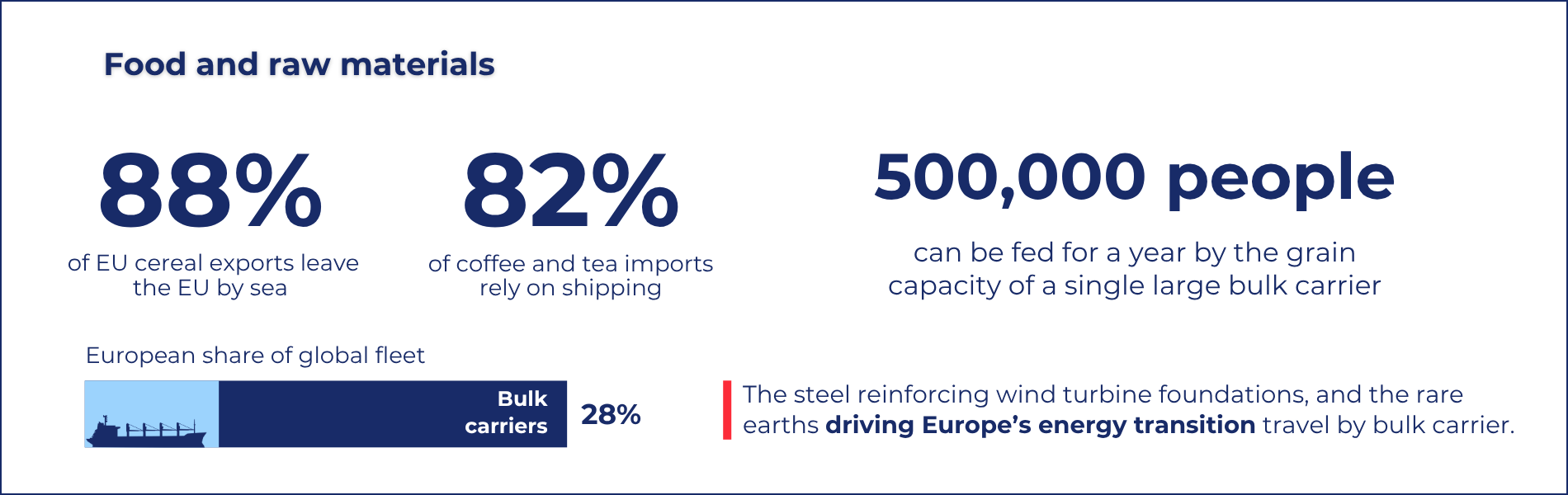
Food and raw materials: A strong European fleet is critical to Europe’s food security and access to raw materials, keeping Europe and the world fed and supporting the energy transition.
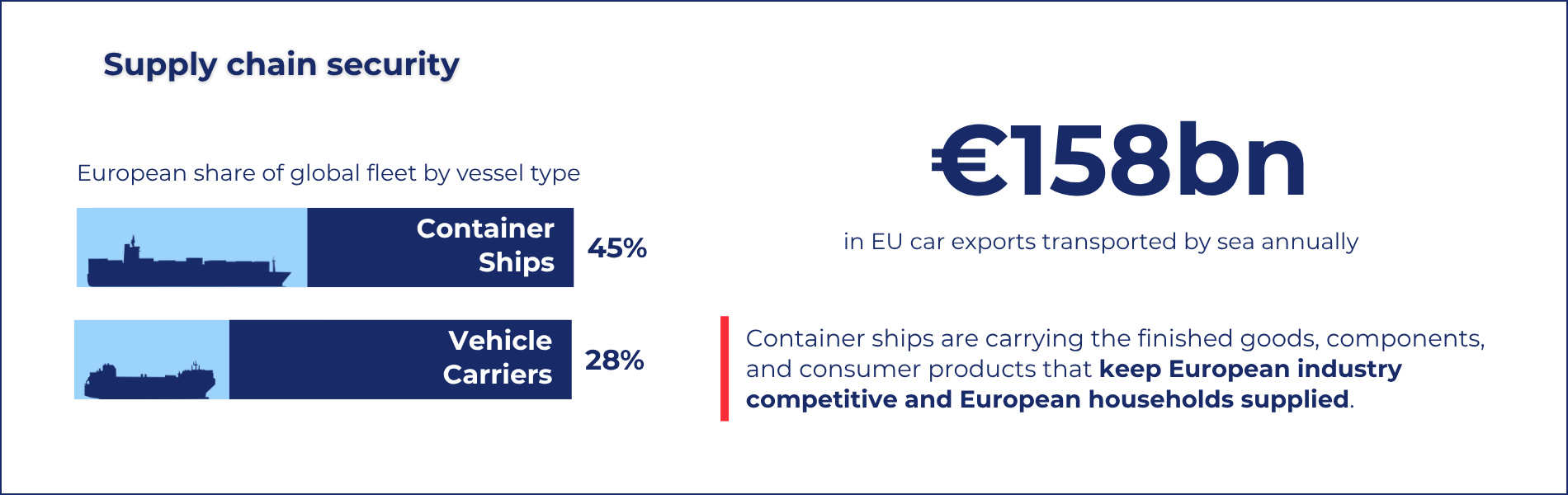
Supply chain security: A strong European fleet connects Europe to the global markets.
Want to know more?
Promotional materials:
- Flyer: The economic value of European shipping – key findings (2026)
- Infographic: The economic value of European shipping (2025)
- Infographic: European shipping & security (2025)
- Infographic: What we talk about when we talk about shipping (2025)
- Flyer: Deloitte EU Shipping Competitiveness Study (2025)
Studies:
- The economic value of European shipping (ES|ECSA in-house analysis, 2026)
- EU Shipping Competitiveness Study (Deloitte, 2025)
- The economic value of the European shipping sector (CE Delft, 2025)